

Knowing your place
We often inhabit places without knowing how our activities shape the natural landscape. So map-based stories that visualise what is happening beneath our feet and in the air around us can be helpful. These two videos for Somerset Wildlife Trust are good examples.
We often inhabit places without knowing how our activities shape the natural landscape. So map-based stories that visualise what is happening beneath our feet and in the air around us can be helpful. Somerset Wildlife Trust wanted to show that currently, the way most land is managed in the Somerset Levels and Moors is both contributing to climate change (by releasing greenhouse gases like methane and CO₂) and making us more vulnerable to its impacts, particularly flooding.
“Peat restoration is the quickest way to reduce carbon emissions. And proactive flood management provides multiple benefits to the local community. These great films will be very helpful in getting across our key messages at shows and events. ”
Real World Visuals made two videos to show that by harnessing the power of nature and making a few changes to how people manage land, the Levels and Moors can deliver important solutions that reduce emissions and help people adapt to the changing climate. More information on the Adapting the Levels project here.
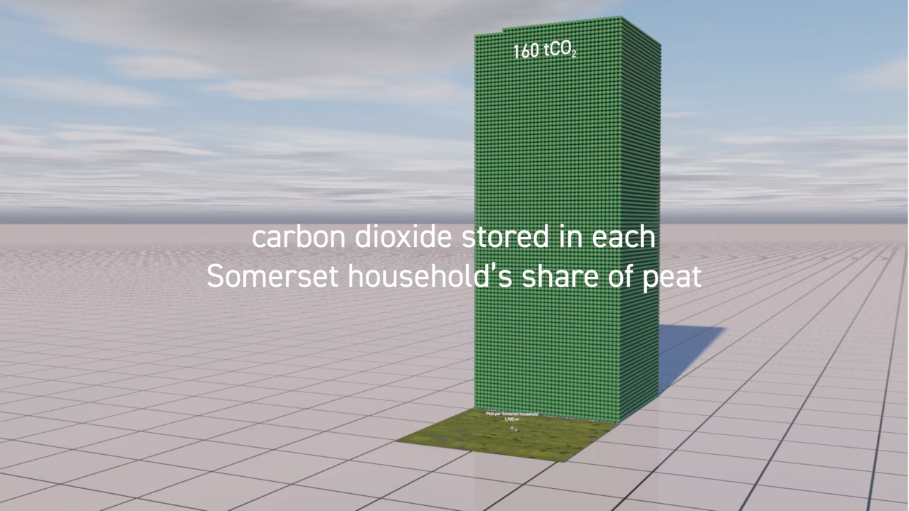
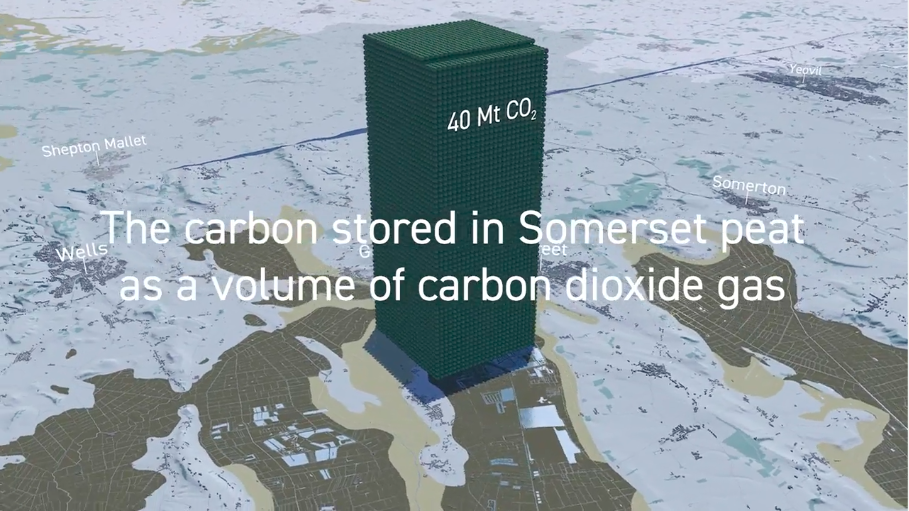
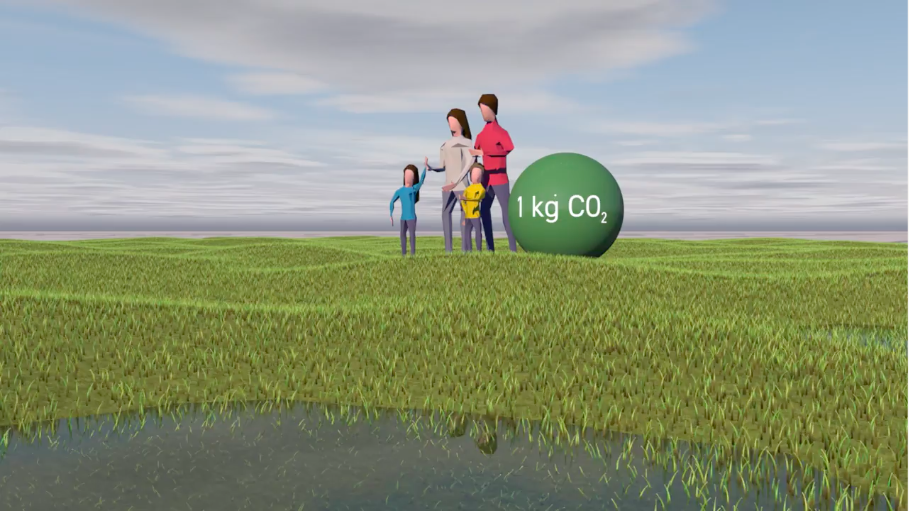
“We are really happy with the end result of both videos. They concisely communicate the issues or peat restoration and river reconnection to a broader audience, and I think the visual elements demonstrating carbon storage and flooding risk are particularly striking, and help bring the story to life”
Do get in touch if you would like an animation to show an important place-based environmental story. info@realworldvisuals.com

Electric vehicles - the raw materials
Electric vehicles are at the heart of the clean energy transition. But as prices reduce and manufacturers increase their model line ups where are the raw materials needed to produce rapidly increasing volumes of EVs going to come from?
Electric vehicles are at the heart of the clean energy transition. But as prices reduce and manufacturers increase their model line ups where are the raw materials needed to produce rapidly increasing volumes of EVs going to come from?
This is the key question that this film, presented by Professor Iain Stewart, and commissioned by SRK Consulting seeks to address.
The film aims to raise public awareness of the positive role geologists, geoscience, and in particular, mining of metals and other raw materials, will play in the transition from fossil fuel to electric vehicles.
“We love the video. The (patient) RWV team gave artistic direction and relevance to our ideas and really brought them to life in a way we didn’t expect.”
Client: SRK Consulting https://www.srk.com
Thanks for contribution to the film:
Professor Iain Stewart https://www.plymouth.ac.uk/staff/iain-stewart
Epiroc https://www.epiroc.com/en-uk
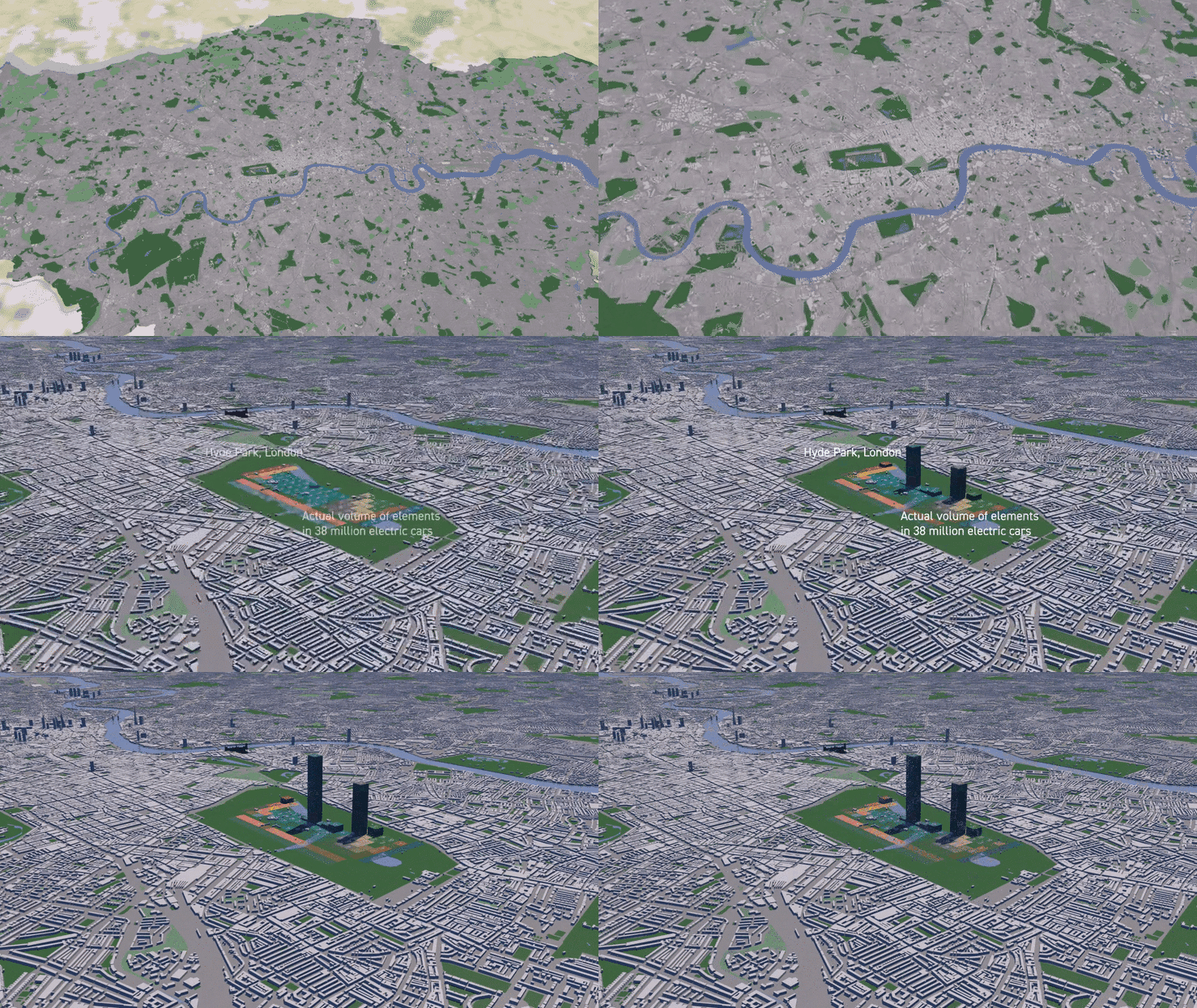
Extract GIF from the film showing the global volume of materials needed for the world’s electric vehicles.

What’s the carbon footprint of cement?
The global cement / concrete supply chain currently produces a disproportionate amount of greenhouse gas emissions. Innovative solutions that make cement and concrete production and usage sustainable are urgently needed. But how do you bring together different technology, finance and academic stakeholders to rapidly reduce those emissions?
The global cement / concrete supply chain currently produces a disproportionate amount of greenhouse gas emissions. Innovative solutions that make cement and concrete production and usage sustainable are urgently needed. But how do you bring together different different academic, financial, and industrial stakeholders to rapidly reduce those emissions?
Real World Visuals were contacted by Pure Green Cement, a membership organisation that provides a platform to accelerate connections between stakeholders with a vested interest in climate change mitigation in the cement / concrete industry. They wanted to bring innovative ideas out of papers and labs and into real world solutions by accelerating connections between academia, industry, and the financial sector. They firmly believe that innovations needed in this industry reside in the minds of academics, and by bridging academia with necessary funding and resources, they aim to build the foundation for a greener cement industry.
We created a simple animation designed to catch the attention of academics / researchers working on carbon abatement research as well as members of the financial community looking to fund projects that mitigate climate change. The film not only shows the carbon footprint of global cement production, but it makes it ‘real’ by also showing the volumes of cement. A good example of our ‘concrete visualisation’.
“As a disproportionate CO2 emitter, the cement industry needs innovations that will reduce its carbon footprint. However, it is hard to grasp just how much cement is produced worldwide and the associated CO2 emissions by looking at numbers on paper. PGC wanted to give our audience a way to visualize these stark figures in order to demonstrate the need for emissions reductions in this vital industry, and RWV’s video has helped us achieve this.”
Data and assumptions behind this video can be found here: Data and Assumptions
Client: https://puregreencement.com

All forests are not the same
Primary ‘old growth’ forests are unique and irreplaceable. But how do you get that message across to governments, policymakers and corporations? And the message that not all forests are the same?
Primary ‘old growth’ forests are unique and irreplaceable. As well as sustaining local communities, they protect over two thirds of the planet’s land and freshwater species, including countless endangered species. They are natural quarantine areas, preventing the spread of zoonotic diseases like COVID19. And they store vast amounts of carbon from the atmosphere, half of which is locked up in the massive old trees which tower over the forest canopy. But how do you get that message across to governments, policymakers and corporations? And the message that not all forests are the same?
We were asked by two campaigning NGOs IntAct and Wild Heritage, to create videos that get across these important messages. Firstly how much forest remains - we are currently losing a hectare of these forests every two seconds - and how much has been lost to degraded, regrowth and plantation forest.
Secondly, the destructiveness of the practice of ‘sustainable forestry’ in old growth forests, particularly in the tropics. This popular way of ‘preserving’ these forests is to only take out the big old trees as these are the most valuable. But this practice can only work when a few trees are removed and replacements are given at least 100 years to regrow, something that rarely happens in practice.
So please watch the videos, pass the links to friends, family and colleagues. You might like to think about a more sustainable alternative when you are next looking to replace your kitchen worktop with a hardwood like Iroko.
What's in a phone?
Mobile phones have become a huge part of our daily lives, but what are they made of? We made an animation showing the different elements including rare earth minerals for one phone, and also in all the phones made in a year (that’s 1,475 million smartphones)

Materials in a mobile phone with pennies for scale
Mobile phones have become a huge part of our daily lives, but what are they made of? And could the materials they are made of be visualised? This was the challenge set for us by an initiative organised by the Sustainable Earth Institute at the University of Plymouth - to enable researchers to communicate with wider audiences by partnering with creative organisations.
The video shows Dr Arjan Dijkstra from The University of Plymouth putting an iPhone into a blender (DON’T TRY THIS AT HOME) and analysing the contents. The second half features our animation showing the different elements he found including rare earth minerals.
Geologists Dr Arjan Dijkstra and Dr Colin Wilkins from the University’s School of Geography, Earth and Environmental Sciences were investigating how we are using earth’s resources, especially the metals known as and rare earth elements in our most often-used technology. They wanted an animation that could be educational for the general public on the future of sustainable systems, as well as useful for students and researchers. The answer was an exploding phone whose contents re-arranged to show quantities of materials to scale. Audiences are able to ‘see’ the quantities of these materials in one phone, and in all the phones made in a year (that’s 1,475 million smartphones)
The first step for Dijkstra and Wilkins was to carry out a full elemental analysis of a mobile phone in their labs. For this, they crushed a mobile phone in a blender, dissolved the scrap, and analysed the solution in Plymouth University’s trace metal laboratory. The results showed that everyday phones are rich in gold, neodymium, tungsten and cobalt, to name a few critical materials. For instance, concentration-wise a phone has 100 times more gold, or 10 times more tungsten, than an ore that geologists would call ‘high-grade’.
“I now view the phone in my pocket not just as a window on the world but also as a store of precious metals.”
The ‘exploding phone’ aims to inform and stimulate further discussion on renewable and sustainable sourcing of materials. It is important that consumers are more aware of the materials that make everyday technology work, where they come from, and their environmental or social costs.
More information: https://www.plymouth.ac.uk/news/scientists-use-a-blender-to-reveal-whats-in-our-smartphones

60 Million Unwanted Christmas Gifts
What does a pile of 60million unwanted Christmas presents look like? This image supported a campaign which called on UK shoppers to give more meaningful gifts at Christmas.

What does a pile of 60million unwanted Christmas presents look like? That’s exactly what Sendacow.org asked us to create for their new Christmas campaign which calls on on shoppers to give more meaningful gifts this Christmas.
Millions of pounds are wasted on unwanted gifts which will likely end up in the bin.
A new survey from YouGov has found that over half (57%) of Brits who celebrate Christmas receive at least one unwanted gift on average at this time of year, with 37% claiming they would be happy to receive a charitable donation as a present [1].
Nearly half (48%) admitted they struggle to find good presents for their family and friends and bath products topped the given list of the nation’s least loved Christmas presents.
Top unwanted Christmas gifts:
Bath products (38%)
A film/ boxset (18%)
Candles (16%)
Chocolate (16%)
Socks (14%)
The average person spends between £10 - £20 on unwanted Christmas presents for friends and loved ones. Instead they could buy:
Two chickens that can provide malnourished families with eggs to eat and sell (£16)
Garden tools for two families so they can grow their own vegetables (£14)
Fruit trees to help people establish their own orchards (£20)
With nearly half of shoppers admitting they struggle to find good presents for loved ones, charity gifts could be the way forward for a less wasteful and more meaningful Christmas this year.
To find out more and donate to this great cause visit Sendacow.org.
[1] All figures, unless otherwise stated, are from YouGov Plc. Total sample size was 2,182 adults, of which 1965 celebrate Christmas. Fieldwork was undertaken between 1st - 2nd November 2018. The survey was carried out online. The figures have been weighted and are representative of all GB adults (aged 18+).
[2] Based on findings of YouGov survey when extrapolated to the GB population of 50,644,094 million people, 90% of which celebrate Christmas and 94% of whom gave an opinion. The survey found that, on average, Brits who celebrate Christmas received 1.4 unwanted presents in an average Christmas – 59,982,864 overall.
[3] Based on findings of YouGov survey when extrapolated to the GB population of 50,644,094 million people, 90% of which celebrate Christmas and 97% of whom gave an opinion. The survey found that, on average, Brits who celebrate Christmas and give Christmas presents to friends spent £18.31 – £380,477,739 on a Christmas present for a friend. Calculations by Greenhouse PR.
Playing with Ultrasonic Levitation
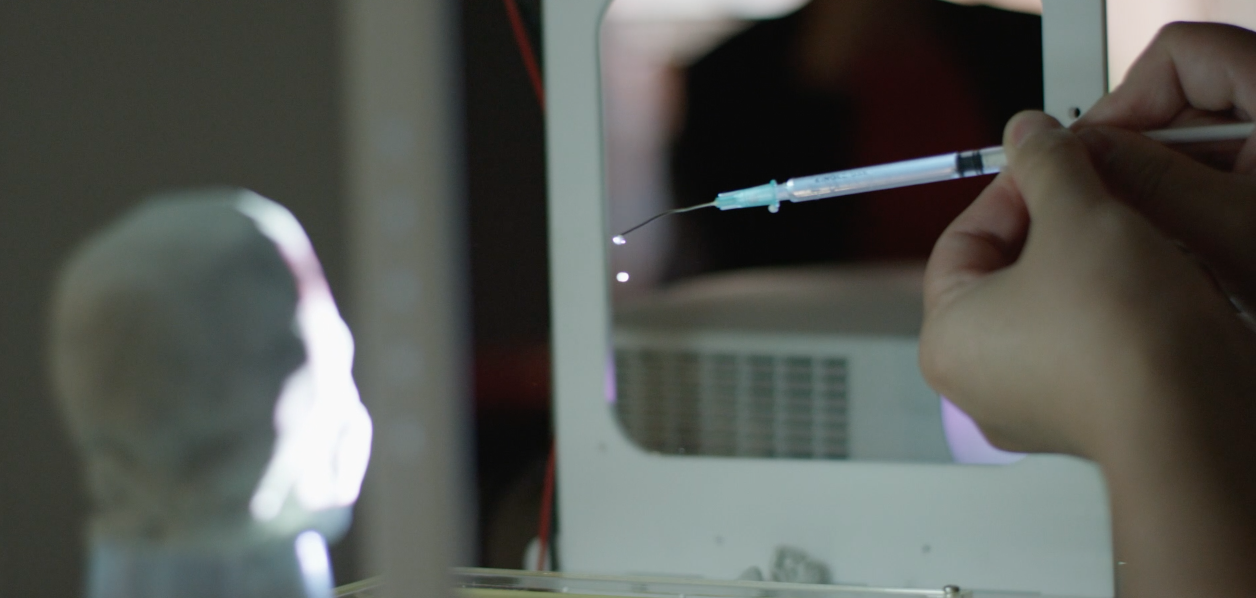
If you had a magic levitation device, what would you use it for? In this bespoke project with Sussex University we brought together artists and engineers working on an ultrasonic levitating device.

If you had a magic levitation device, what would you use it for? Every nascent technology confronts its developers with a question like this. In August 2018 Real World Visuals managed a bespoke project; to bring artists and engineers together for a workshop that enabled them to play with an ultrasonic levitating device.
Of course, the apparatus in question isn't really magic: it just looks like it. The device is able to levitate small, lightweight objects (solid and liquid) in an ultrasonic field of 40,000 Hz. Across the country, university engineers and technologists are researching this device and its affordances.
Our brief was to coordinate a workshop that initiated a collaboration between art and science. As artists often look at the world in an unusual and unexpected way, the workshop aimed to provide a space where scientists could tap into different approaches and ideas.
How did this come about?
In 2014, we began talking to Professor Sri Subramanian from Sussex University (who was then at Bristol University) about his bubble machine. As a data visualisation company, we were interested in ways in which we could use the machine to physically show greenhouse gas emissions like our carbon bubbles. Following this initial conversation, Sri came to us to see if we would like to be involved with a new proposal involving acoustic levitation and the potential of being able to visualise ‘things’ with it.
The Workshop
The Levitation Workshop took place over two days at Sussex University and brought together 8 artists and 9 engineers. Over the course of the workshop, artists were introduced to the technology to explore what the device could do, talk to engineers and experiment with their ideas. Watch the video of the workshop on Youtube.

Visualising Plastic in the Mediterranean
Our client wanted to show the scale of the problem of ocean plastic to an audience at the Cannes Lions Festival. So we made a film to show the rate of plastic waste in the Mediterranean Sea every second, and every day. And we liked the idea of filling the bay of Cannes with toy ducks!
Like many of us, Project Everyone are concerned about plastic in our oceans. They needed an animation that would bring the scale of the problem home to an audience at Cannes Lions Festival 2018. We considered a number of ideas, including a Godzilla-like monster made from plastic litter that would emerge from the sea and start attacking people on the Boulevard de la Croisette. Our calculations indicated that a day's plastic day's litter would assemble itself into a monster 121 metres tall. Nice!
The option we finally went for gives the audience several physical insights, and allows them to use their direct experience of the world to make sense of what would otherwise be just another number. We could have shown the quantity of plastic waste by modelling the waste itself, but there's too much variety to get a feel for it. More importantly, there is something disgusting about litter, which creates a barrier to relating to it on a physical level. A 'duck' is a friendly unit of plastic, and one just about everyone has experience of handling, which makes it useful for physical insight.
The film gives a sense of the rate we are adding plastic to the sea in real-time, which is a time scale most of us can relate to. On average, 170 ducks a second - all day, every day. Viewers make sense of that rate in two ways: they 'count' the individual ducks (make a visual judgement about the scale of the number) and they also see the area they occupy grow. Counting and area are a powerful combination.
We spaced the ducks so that a day's plastic litter fits neatly in the bay. Viewers can combine a close-up view that provides a sense of the density of ducks with a sense of a familiar area. A day is also a useful unit of time to represent a rate - it's a period of time we can 'inhabit' as a whole. A year is a good unit for accounting, but it's not something we can experience as a unit, so daily quantities usually provide more insight into a rate than annual quantities. Real-time, combined with area per day, gives two different ways of making sense of the rate.
The whole film is constructed with the aim in mind of leaving the audience with a sense of scale. The child in the boat helps establish the size of the ducks and also prompts viewers to consider what a duck feels like. The diagrammatic, colourless appearance is deliberate. We want to keep viewers focused on the ducks and want to avoid provoking any irrelevant questions.
Project Everyone is a not-for-profit agency that seeks to put the power of great communications behind The Sustainable Development Goals (also known as the Global Goals), accelerating the creation of a fairer world by 2030, where extreme poverty has been eradicated, climate change is properly addressed and injustice and inequality are unacceptable.
Visualising people not numbers
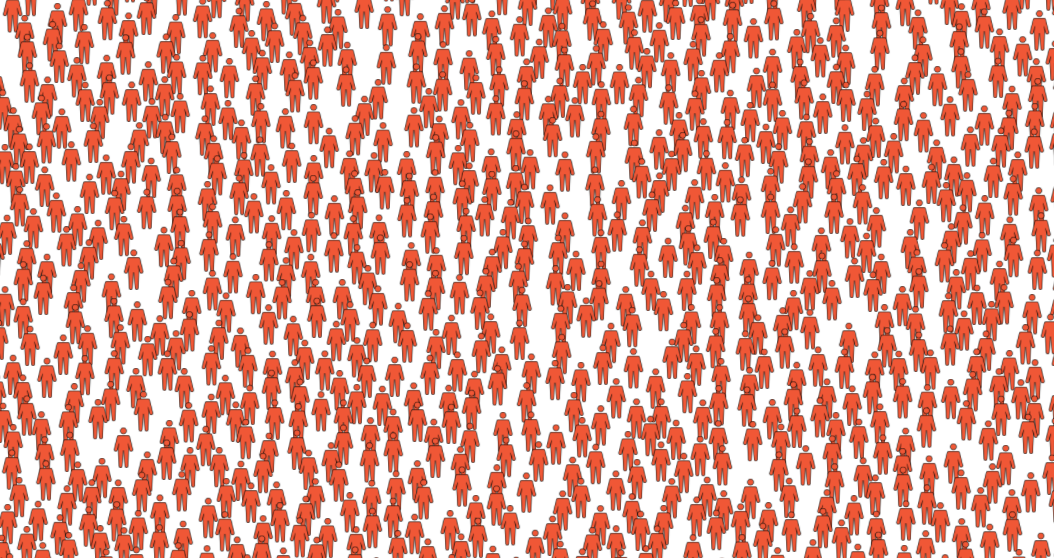
Many of us find it hard to make sense of people in statistics. So we created a ‘crowd visualisation’ tool for an NGO that allows people to explore data about their full and associate members by type of organisation, region, country, language and other characteristics in 3D and 2D.

We were asked by Global Network of Civil Society Organisations for Disaster Relief (GNDR) to provide a crowd visualisation that helped people better understand their membership profile. We designed a tool that makes individual GNDR members visible, and so brings a table of numbers to life. The tool allows people to explore data about full and associate members by type of organisation, region, country, language and other characteristics.
Our crowd visualisation can be viewed in 3D and 2D. These different perspectives allow users to interpret the data from different angles.
Feel free to interact with this product below.
First click on 'load full members' and then use your mouse to play with the 3D or 2D options to explore the people in the crowd visualisation.
Or you can visit the project page here
Visualising waste worth £3 million
West Sussex County Council wanted to draw attention to the recycling that residents don't do, but could. We created an animation for a public engagement campaign using social media, and a range of still and print materials for bill-boards and local news advertising.
How do you draw attention to the recycling we don't do (but could)? And how can you show people the benefits? West Sussex County Council Waste Management Service wanted an innovative way to reach out to households and approached us for ideas. Starting point was the strap line for the campaign - Think before you throw - and a giant spreadsheet which was trawled for usable data.
Real World Visuals produced a video, GIF, video extract films and a range of still and print materials for the public engagement campaign. This material is currently being used on social media, in entrances to public libraries, on bill-boards and local news advertising.
“From concepts to finished assets, it has been a really positive experience to work with Real World Visuals.”
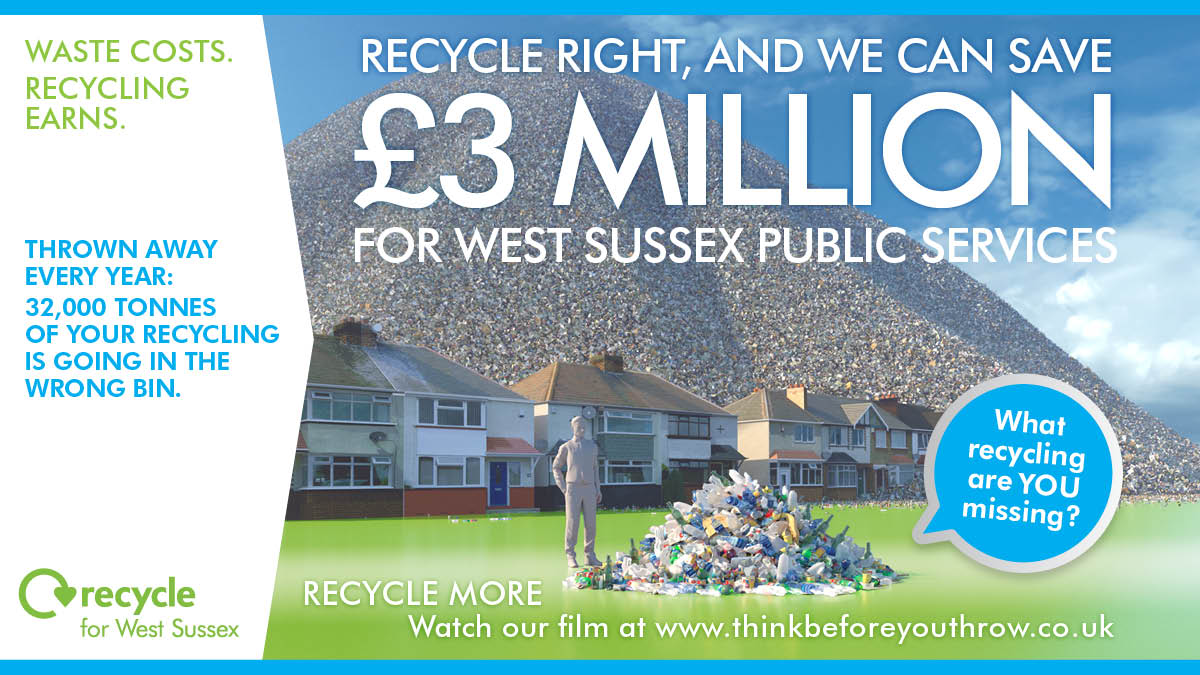
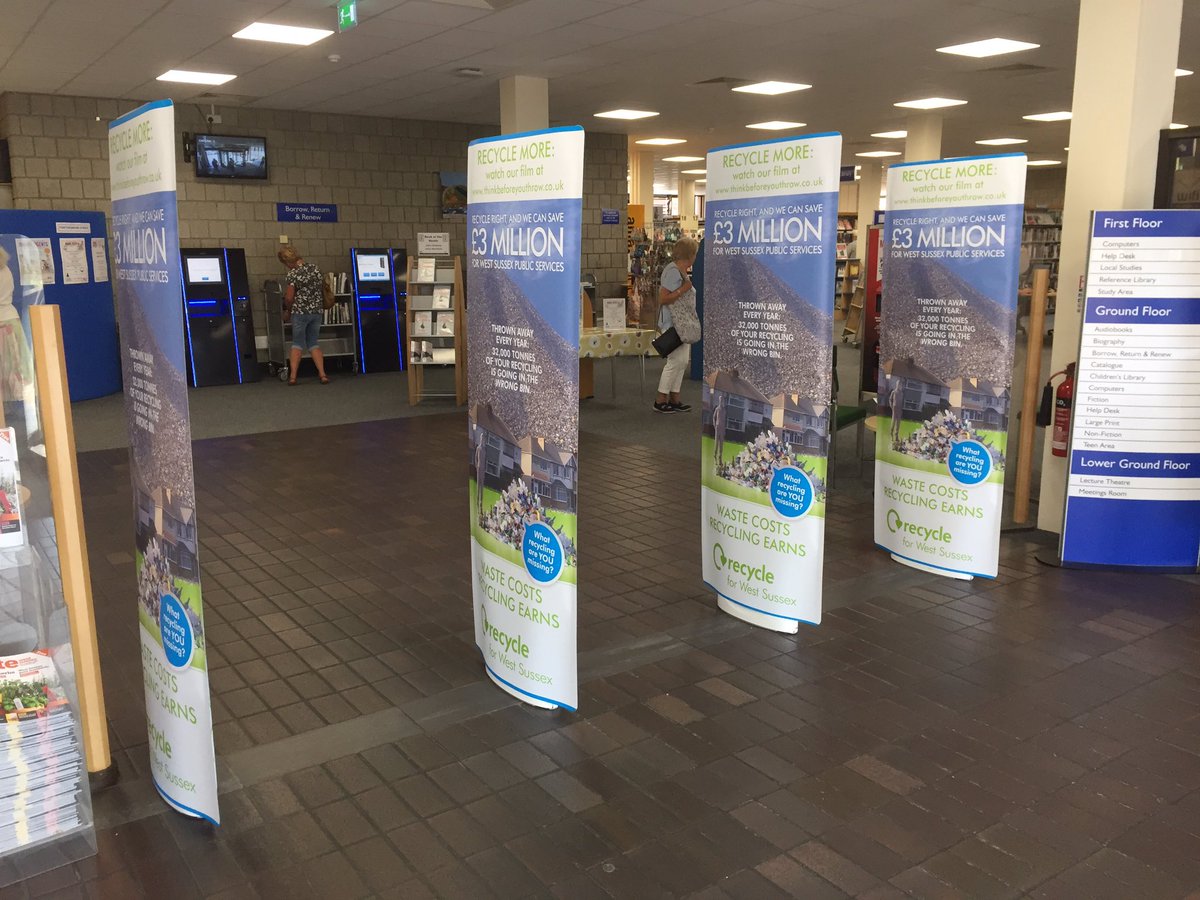
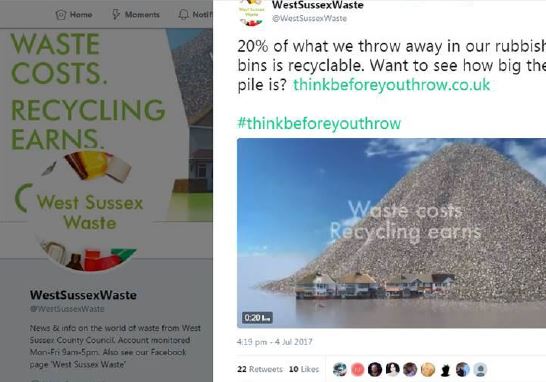
The material produced by Real World Visual focused on the central £3 million saving that could be made if more waste was diverted from landfill. Visuals shows the 32,000 tonnes of material wasted each year that could be recycled on a Council-wide as well as house-hold level.
“At this point the main campaign film has had over 43,000 views on Facebook alone, with other posts and ads from the campaign receiving over 130,000 Facebook engagements and impressions from targeted West Sussex residents. The campaign has had 17,989 reactions on Twitter. The analysis for the website engagement is being processed and we look forward to similar hugely positive stats.”
To read an interview with the client about the development of this campaign, click here.
For more information about Think Before You Throw, from West Sussex County Council Waste Management Service.
Exploring Ireland’s energy future
Ireland has agreed to cut carbon emissions by at least 80% by 2050, compared to 1990 levels. We provided the visual interface for a web-tool that allows anyone to access and explore different future electricity and energy supply and demand options for the country.
Ireland has agreed to cut emissions from electricity generation, buildings and transport by at least 80% by 2050, compared to 1990 levels. But shifting to a sustainable energy system requires both political and societal support. An easy way to visually explore energy options was needed.
Real World Visuals provided the visual interface for the Ireland 2050 web-tool, part of an educational project developed and coordinated by The Energy Institute in Ireland. The web-tool allows anyone to access and explore different future electricity and energy supply and demand options for the country.
“We believe in empowering people to participate in the discussion about Ireland’s energy system; by knowing how it works, what it takes to have a secure and stable supply of energy to people’s homes and businesses, whether it is fair and competitive, how it has developed over time, and how it could continue to develop with greater efficiency and synergy with our community and our environment.”
As different options are selected the reduction in carbon dioxide emissions is shown as a real volume (m3 per second). From the beginning a key part of the brief was to allow the tool to be used on smart-phones and tablets as well as conventional computer screens.
Making a tool like this work on such a wide variety of devices imposes quite strict constraints. We were very limited, for instance, in what we could do in 3D - a library such as Three.js won’t work on all devices, many of which have no 3D hardware and can’t handle WebGL. Because 3D is so important to the way we make quantities visible, we built our own very simple system for generating isometric diagrams - a simplified 3D engine.

The excellent Ireland 2050 website provides detailed yet accessible information on the past and present energy generation and use in Ireland, as well as the My2050 tool and the specialist Irish 2050 Calculator.
The My2050 tool can be explored here. To see how it works on smaller screens open in a new browser window.
Invisible payments made real
An unusual request from a successful USA start-up - could we find a simple way to show investors the exponential growth of their mobile phone money transactions in Mexico? Using dates and geo-location data for all transactions we created this simple short video.
An unusual request comes from a successful start-up business in the USA. Could we visualise the exponential growth of mobile phone money transactions using their app?
PayClip have quickly become market-leaders for smart phone payment in Mexico and wanted a simple way to show potential investors this growth pattern. An intriguing challenge. Armed with a substantial spreadsheet giving dates and geo-location of all transactions we created this simple short video. We like it and are looking forward to visualising other geographic and time-based data sets.

Visualising Bristol's Waste
Bristol Waste Company is keen to engage directly with households about the benefits of waste and litter minimisation and recycling. Real World Visuals has created two films that show the actual volumes of litter, recycling and recycling opportunities. The goal of the project is to elicit a measurable increase in waste minimisation and recycling and provide direct cost benefits to the council.
Bristol Waste Company is keen to engage directly with households about the benefits of waste and litter minimisation and recycling. Real World Visuals has created two films that show the actual volumes of litter, recycling and recycling opportunities. The goal of the project is to elicit a measurable increase in waste minimisation and recycling and provide direct cost benefits to the council.
This film shows the volume of litter collected from Bristol's street every day - 10 tonnes, and every year - 350,000 tonnes.
This film shows the volume of material recycled by households every week and annually. The film also shows the amount of material that is NOT recycled. - the wasted recycling opportunity for helping the environment and saving costs for the council.
“The films have been invaluable in helping establish the Bristol Waste brand and our company objectives. The visuals have allowed us to present a complex dataset to a wide audience in an intelligible, striking and immediately engaging way.
”


We started the project with a data analysis and scoping process to determine different visual options, bearing in mind the launch of the initiative at the International Balloon Fiesta in August 2016 where Bristol Waste sponsors the Solar Balloon.
Because the event took place at the Ashton Court estate on the edge of Bristol, we decided to commission drone aerial photography of the estate as the background scene, rather than using a computer generated background.
Bristol Waste Company is the city’s local recycling, waste collection and street cleansing company. The company employs 450 people who make 17 million scheduled collections every year, operate 180 vehicles, collect 140,000 tonnes of waste and recycling per annum of which 53,000 tonnes is sent for composting or recycling. BWC cleans 800 miles of streets and footpaths and deals with 180,000 ad hoc job requests and service queries annually.
See more at www.bristolwastecompany.co.uk
See blog about how these films were made here.
All our images are licensed under Creative Commons and available to download on our Flickr page.
The value of tap water
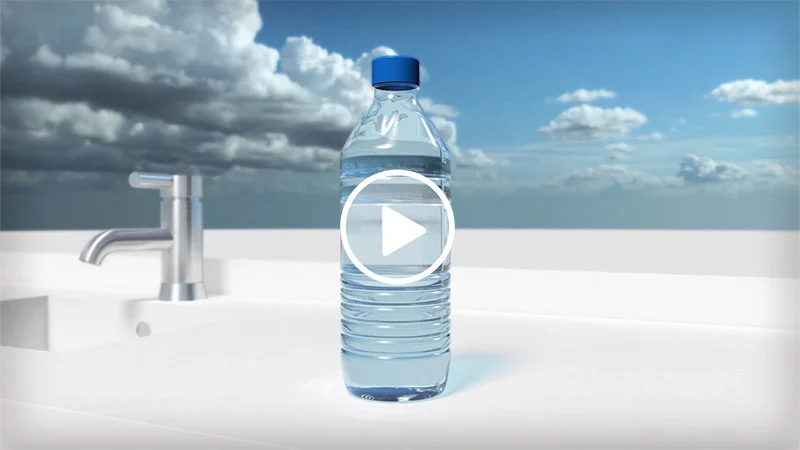
How can we make an abstract idea like 'the value of water' real? Research shows that tap water in the South West of England is typically 600 times cheaper than bottled water bought from a shop. This simple video was designed to get this message across to consumers.
South West Water came to us to help them make the value of the water they supply clear to their customers. The average household bill for South West Water’s services is now lower than it was seven years ago. The company will peg average household bills below inflation to the end of the decade whilst spending around £1billion on maintaining and improving services. These are facts that the company wants to communicate, but underlying it all is the basic idea of value for money. They asked us if we could help make that real for their customers.
They brought us research to show that that tap water in the South West is typically 600 times cheaper than bottled water bought from a shop. We showed that figure in terms of what you get for your money. One 500ml bottle of shop-bought water, typically priced at 60p, costs the equivalent of 600 bottles of tap water from South West Water. It helps to actually see 600 bottles. We can understand an idea like 'bottled water is 600 times more expensive' intellectually, but seeing what that means in a physical way gives the idea a stronger sense of reality.