
Ocean carbon removal - a climate solution?
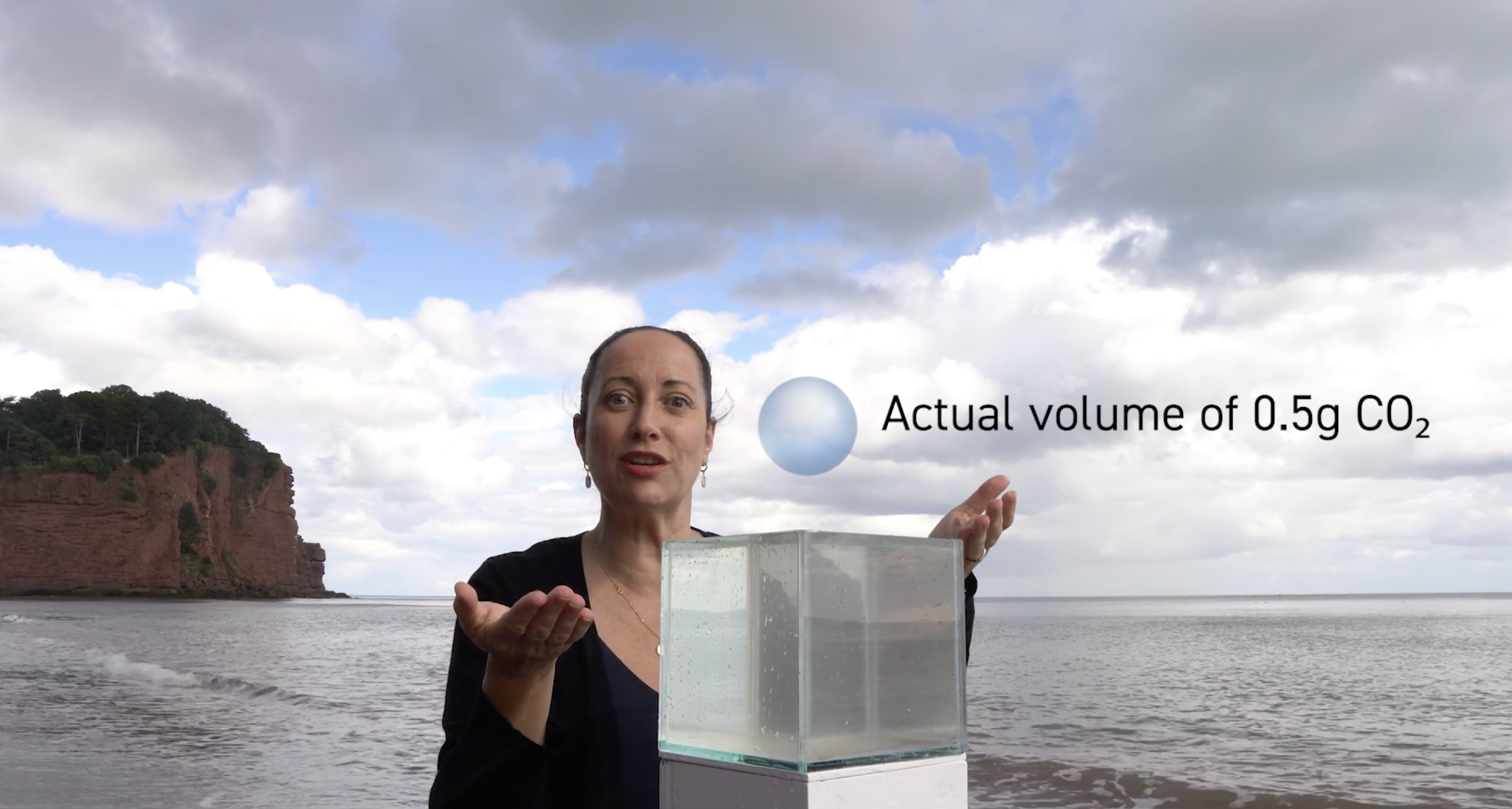
The ocean is like a giant sponge, storing sixteen times as much carbon as all the plants on the planet. Technologies are now emerging that use the ocean to actively remove CO2 from the air and help maintain planetary temperature. But how do you communicate the issues, the complex chemistry and scale to people in coastal communities who will be impacted by these technologies?
The ocean is like a giant sponge, storing sixteen times as much carbon as all the plants on the planet. Technologies are now emerging that use the ocean to actively remove CO2 from the air and help maintain planetary temperature. But how do you communicate the issues, the complex chemistry and the scale to people in coastal communities who will be impacted by these technologies?
Video explaining two marine carbon removal (CDR) approaches: ocean alkalinity enhancement (OAE) and direct ocean removal (DOR).
That was the challenge we were set by The Institute for Responsible Carbon Removal and [C]Worthy, a non profit organisation dedicated to accelerating ocean-based climate solutions and their partner the American University's Institute for Responsible Carbon Removal. They wanted our help to communicate ocean-based carbon dioxide removal strategies to engage people at a series of in-person workshops in US and Canadian coastal communities. The intention of the film is to explain the chemistry of ocean carbon removal to facilitate meaningful discussion. But it is not the intention to persuade the audience that ocean carbon removal is a good idea or right for their community.
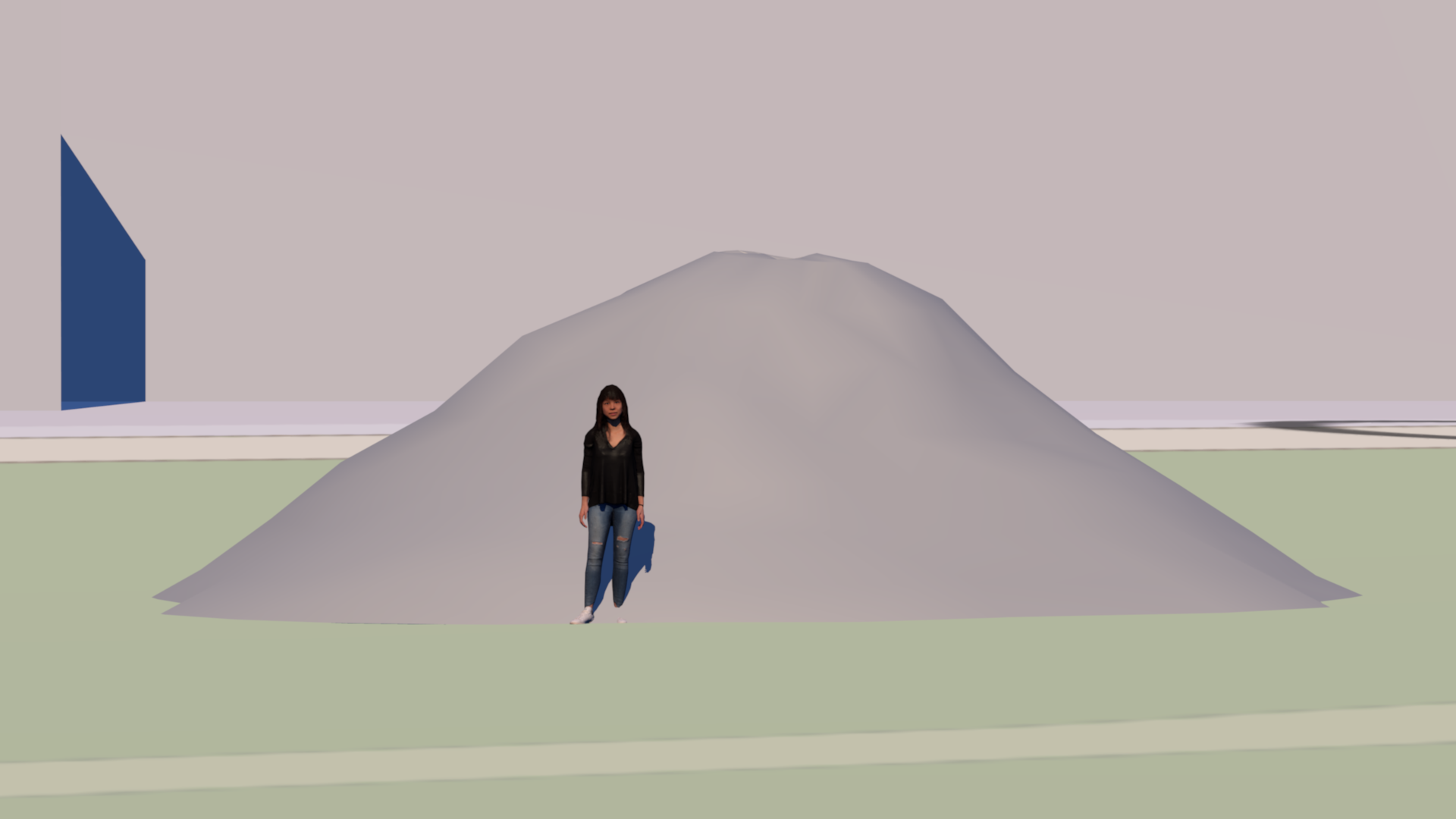



These sketches were created to show volumes of limestone chips and volume of carbon dioxide that could be removed from the atmosphere with successful large-scale ocean alkalinity enhancement.
This film was made over the summer months of 2025 with invaluable CGI assistance from Jon Feuell. The live action scene shot on Holcombe beach, Devon with Director Adam Nieman, actor Rosalind Moreno-Parra, cameraman Will Hodges and general assistant Antony Turner. The plinth and one gallon glass cube were made by Antony Turner and James McHardy.


Further information from [C]Worthy and the Institute for Responsible Carbon Removal.

Time is running out
How do you tell the most important ‘story’ in the world? It’s a story that most ordinary citizens don’t want to think about, because it is complex and involves invisible gases. It’s the story of the amount of carbon we can “afford” to put into the atmosphere, taking account of where it might go and what it might do.
How do you tell the most important ‘story’ in the world? It’s a story that most ordinary citizens don’t want to think about, because it is complex and involves invisible gases. It’s the story of the amount of carbon we can ‘afford’ to put into the atmosphere, taking account of where it might go and what it might do. This story is called the carbon budget and it profoundly challenges our assumptions about burning oil and gas to fuel our comfortable lifestyles. And the carbon budget varies depending on the extent to which human society is prepared to take risks on the chance of increased heatwaves, droughts, flooding, sea-level rise and human migration.
This video illustrates the carbon budget available if we want to keep within the 1.5 deg C target of the Paris Agreement.
At the current emissions level there is a 50% chance global warming will exceed 1.5 degrees C by 2023. This was the primary message that the Global Carbon Project (GCP), based at Exeter University, wanted to get across not just to policymakers at the Bonn Climate accord in June 2024, but also to the wider public. So they commissioned Real World Visuals to convey the essence of the results after they have done all the laborious measurement, compilation and calculation. And that, as usual, comes down to several short films visualising a volume of carbon dioxide gas.
This video shows the current global emissions of the USA, EU, China and the rest of the world in 1000 metric ton blocks in real-time - 1315 tons per second, 79,000 tons every minute.
Sadly, if delegates at the Bonn meeting had really grasped the essence of the problem, and its urgency, perhaps they would not have settled for such a muddled and unpromising outcome from their various discussions. Politicians need to realise that bold action is now required as this ‘story’ is likely to overshadow everything else in the coming years. And citizens, who will be voting for politicians in the coming months, need to know this too. So please share videos and screen-shots (below) widely!


Notes
A compilation of the two videos together is available here.
The Global Carbon Project (GCP), based at the University of Exeter, was created to bring together a global consortium of scientists to establish a common and mutually agreed understanding of the Earth carbon cycle. Its aim was to use this knowledge to influence policy action to slow down and ultimately stop the increase of greenhouse gases in the atmosphere.

Visualising $209 billion climate reparations
How do you visualise climate reparations? That was the question we were asked last year by researchers investigating potential annual reparations to compensate those communities around the world most damaged by climate change.
How do you visualise climate reparations? That was the question we were asked last year by the Climate Accountability Institute who were investigating potential annual reparations to compensate those communities around the world most damaged by climate change. The calls for climate reparations are rapidly growing in the scientific literature, among climate movements, and in the policy debate. At present the costs of climate change are primarily borne by nation states that compensate their own citizens harmed by climate impacts or covered by insurance companies with regard to people and businesses that they insure. Some countries are also now promising to contribute to the Loss and Damage Fund agreed at COP28 to compensate people in low income countries.
“Time to pay the piper: Fossil fuel companies’ reparations for climate damages” argues that a substantial responsibility for the cost of redressing climate harm lies with the companies that engage in the exploration, production, refining and distribution of oil, gas and coal. The opportunity to help communicate this story was quite a challenge, but we created a simple image based on the data in the Paper. However recently we have been wondering whether the $209 billion dollars attributed to fossil fuel companies could be better illustrated by a CGI animation. This is the result.
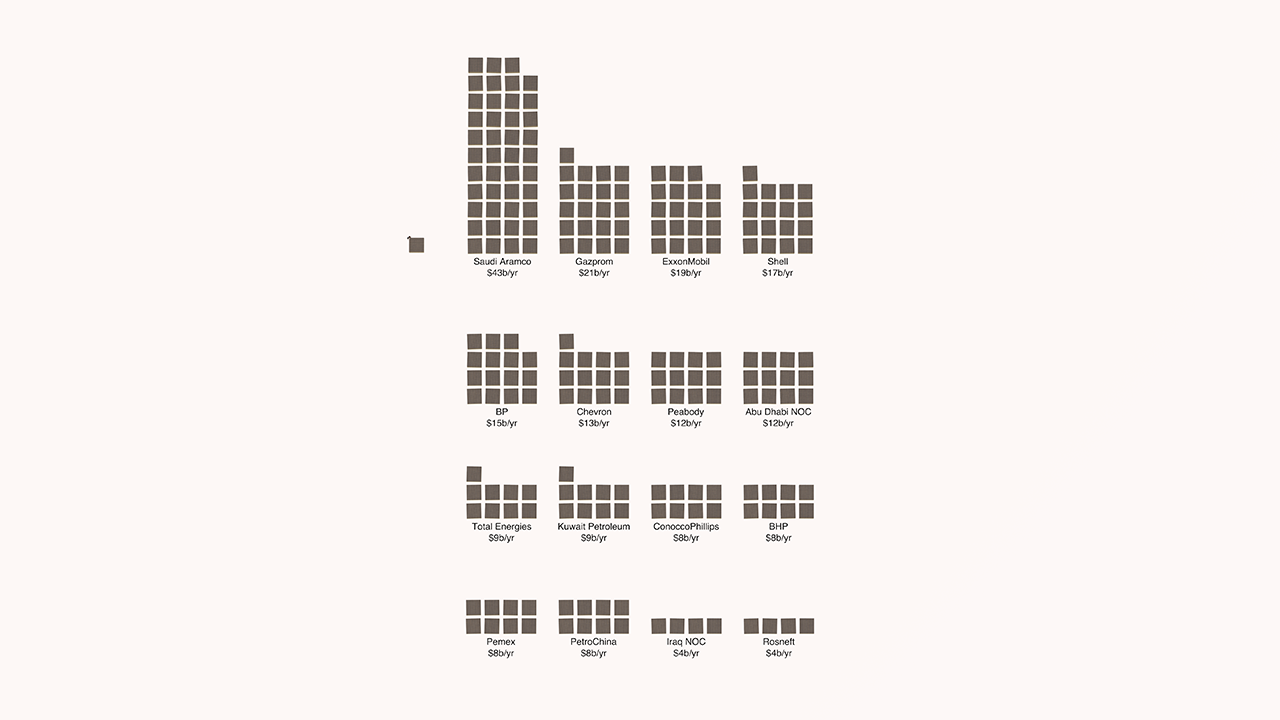
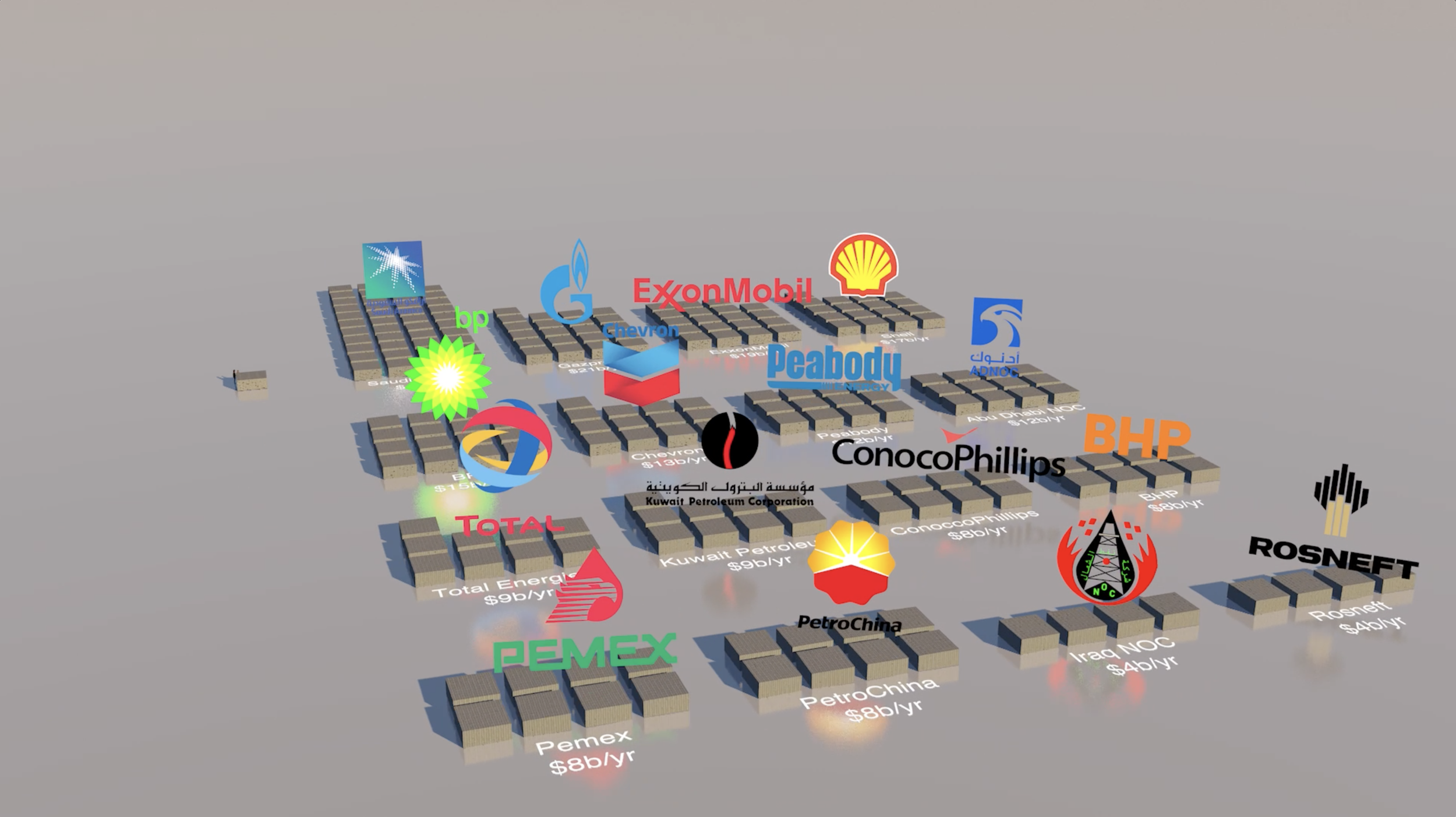
Two perspectives on annual reparations (each block is a $billion)
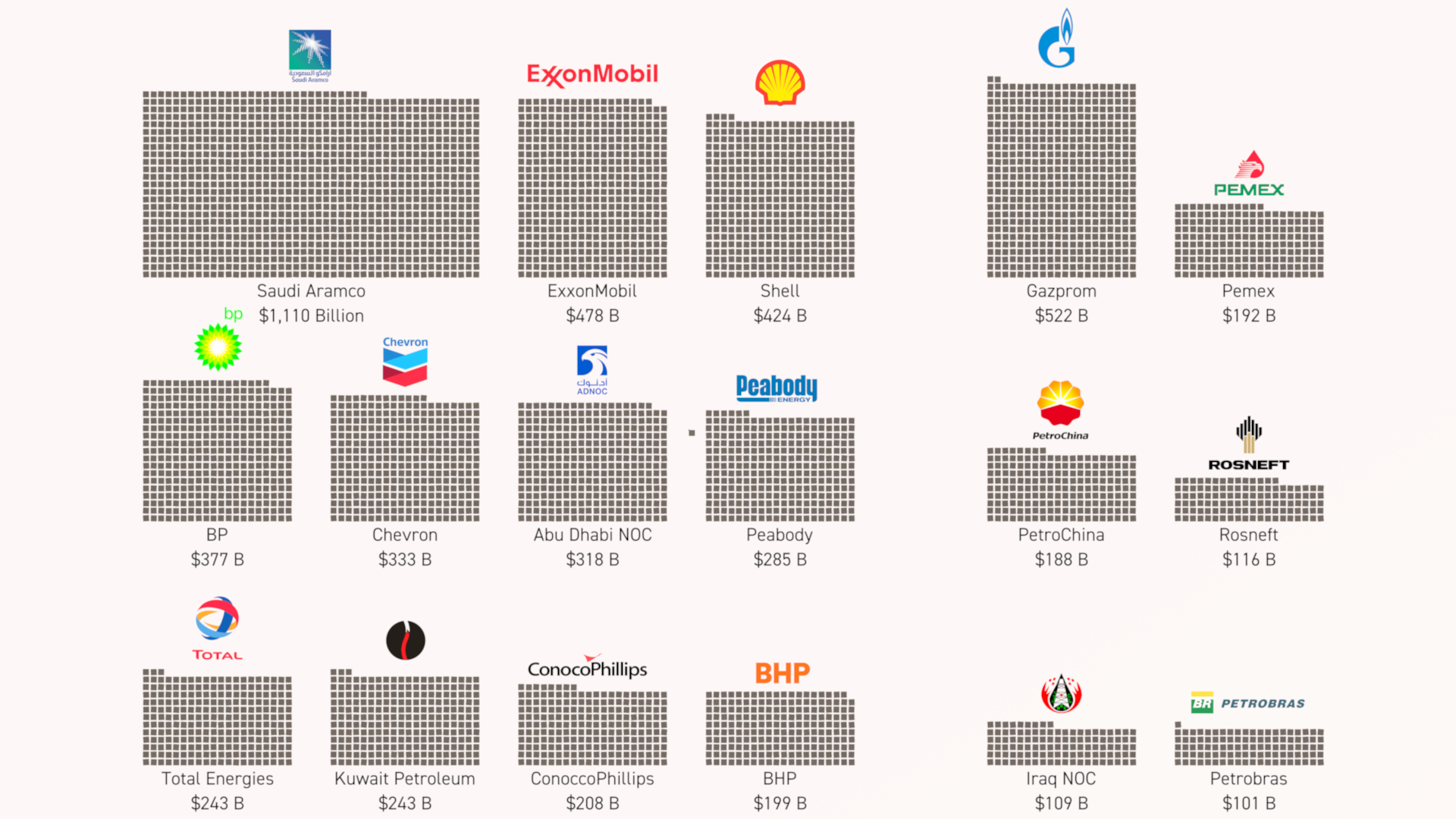
This is the simple abstract image we created for the Report’s Press Release. Each square represents a billion dollars.
“As increasingly devastating storms, floods and sea level rise bring misery to millions of people every day, questions around reparations have come to the fore.
”
Finally we thought it could be useful to create a simple version just showing what $1 billion looks like (in $100 dollar bills)
Real World Visuals is best known for creating images and animations depicting carbon dioxide emissions, savings and targets. But we have also created visuals to show a variety of ‘invisible’ challenges including air pollution, ozone, water quantities, raw materials and even unwanted Christmas gifts.
Contact us if you have a challenge communicating billions of dollars or billions of tons!

Electric vehicles - the raw materials
Electric vehicles are at the heart of the clean energy transition. But as prices reduce and manufacturers increase their model line ups where are the raw materials needed to produce rapidly increasing volumes of EVs going to come from?
Electric vehicles are at the heart of the clean energy transition. But as prices reduce and manufacturers increase their model line ups where are the raw materials needed to produce rapidly increasing volumes of EVs going to come from?
This is the key question that this film, presented by Professor Iain Stewart, and commissioned by SRK Consulting seeks to address.
The film aims to raise public awareness of the positive role geologists, geoscience, and in particular, mining of metals and other raw materials, will play in the transition from fossil fuel to electric vehicles.
“We love the video. The (patient) RWV team gave artistic direction and relevance to our ideas and really brought them to life in a way we didn’t expect.”
Client: SRK Consulting https://www.srk.com
Thanks for contribution to the film:
Professor Iain Stewart https://www.plymouth.ac.uk/staff/iain-stewart
Epiroc https://www.epiroc.com/en-uk

Extract GIF from the film showing the global volume of materials needed for the world’s electric vehicles.

What’s the carbon footprint of cement?
The global cement / concrete supply chain currently produces a disproportionate amount of greenhouse gas emissions. Innovative solutions that make cement and concrete production and usage sustainable are urgently needed. But how do you bring together different technology, finance and academic stakeholders to rapidly reduce those emissions?
The global cement / concrete supply chain currently produces a disproportionate amount of greenhouse gas emissions. Innovative solutions that make cement and concrete production and usage sustainable are urgently needed. But how do you bring together different different academic, financial, and industrial stakeholders to rapidly reduce those emissions?
Real World Visuals were contacted by Pure Green Cement, a membership organisation that provides a platform to accelerate connections between stakeholders with a vested interest in climate change mitigation in the cement / concrete industry. They wanted to bring innovative ideas out of papers and labs and into real world solutions by accelerating connections between academia, industry, and the financial sector. They firmly believe that innovations needed in this industry reside in the minds of academics, and by bridging academia with necessary funding and resources, they aim to build the foundation for a greener cement industry.
We created a simple animation designed to catch the attention of academics / researchers working on carbon abatement research as well as members of the financial community looking to fund projects that mitigate climate change. The film not only shows the carbon footprint of global cement production, but it makes it ‘real’ by also showing the volumes of cement. A good example of our ‘concrete visualisation’.
“As a disproportionate CO2 emitter, the cement industry needs innovations that will reduce its carbon footprint. However, it is hard to grasp just how much cement is produced worldwide and the associated CO2 emissions by looking at numbers on paper. PGC wanted to give our audience a way to visualize these stark figures in order to demonstrate the need for emissions reductions in this vital industry, and RWV’s video has helped us achieve this.”
Data and assumptions behind this video can be found here: Data and Assumptions
Client: https://puregreencement.com

Can humour help the climate crisis?
The world is waking up to the climate crisis. Children are protesting and Extinction Rebellion has gone global. But many people are still unaware of the carbon emissions associated with everyday activities. That’s why we have teamed up with innovative multi-media theatre company Forkbeard Fantasy to see if humour could help.
The world is waking up to the climate crisis. Children are protesting and Extinction Rebellion has gone global. But many people are still unaware of the carbon emissions associated with everyday activities. That’s why we have teamed up with innovative multi-media theatre company Forkbeard Fantasy to see if humour could help.
Each one of us is responsible for about 15kg of CO2 per Weevil per day. Placed in a sphere its volume would translate as this
The Carbon Weevils are a strange species obsessed with digging up and burning fossil fuels. They were originally created in 2007 by innovative multi-media theatre company Forkbeard Fantasy for a theatre production about climate change.
We have now decided to collaborate with Forkbeard to see if comedy could help people better understand the climate crisis. By combining the comic element of the Carbon Weevils with scientifically accurate data visualisation we hope to motivate responsible actions.


See more at www.carbonweevils.org

Fossil fuel contribution to the climate crisis
State-owned and multinational businesses have continued to expand their fossil fuel extraction operations since 1965 despite being aware of the industry’s devastating impact on the planet. In this 20 second film we show what 480bn tonnes of carbon dioxide equivalent (GtCO₂e) looks like.
The Guardian today revealed the 20 fossil fuel companies whose exploitation of the world’s oil, gas and coal reserves can be directly linked to more than one-third of all greenhouse gas emissions in the modern era.
The science community has known of the dangers posed by continuing to burn fossil fuels for over fifty years, as evidenced by a report authored by the Environmental Pollution Panel of the US President’s Science Advisory Committee, which set out the likely impact of continued fossil fuel production on global heating.
We have created a short video to help people understand the scale of this, and an animated chart that shows the history of emissions since 1965.
Cumulative emissions 1965-2017 (MtCO₂e)
New data from Richard Heede at the Climate Accountability Institute in the USA reveals how state-owned and multinational businesses have continued to expand their fossil fuel extraction operations since 1965 despite being aware of the industry’s devastating impact on the planet.
The analysis shows that the top 20 companies on the list have contributed to 35% of all energy-related carbon dioxide and methane worldwide, totalling 480bn tonnes of carbon dioxide equivalent (GtCO₂e) since 1965.
“One of the most important predictions of the [president’s report] is that carbon dioxide is being added to the Earth’s atmosphere by the burning of coal, oil and natural gas at such a rate by the year 2000 the heat balance will be so modified as possibly to cause marked changes in climate beyond local or even national efforts.”
“These companies and their products are substantially responsible for the climate emergency, have collectively delayed national and global action for decades, and can no longer hide behind the smokescreen that consumers are the responsible parties.”

High resolution image with Creative Commons license here: https://flic.kr/p/2huYMqz
See Guardian article here

Reducing global carbon emissions
A film that shows in real time the current rate of global CO2 production - a million tons every thirteen minutes - as well as the reductions needed by 2030 and 2050 to meet the Paris climate target. The film was shown at the 44th G7 summit in Charlevoix, Quebec, Canada in June 2018.

Getting the attention of world leaders at G7 summits is difficult. Particularly if the subject is the urgent need to address global carbon emissions. That's why Project Everyone commissioned us to make a short film with our iconic carbon bubbles to show at the 44th G7 summit 2018 in Charlevoix, Quebec, Canada in June 2018.
The model of Toronto city is used as a real-life scaling landscape to show the rate of global greehouse gas emissions in realtime. The film begins with 1000 metric tonne bubbles of carbon dioxide appearing in real-time. In 13 minutes the rate of production is 1 million metric tonnes of CO2 and in a day the global rate of production is 112 million metric tons.
The film demonstrates the urgent climate action that world leaders need to take in reducing global carbon emissions, and urges them to keep to their reduction targets by 2030 and beyond. As well as showing the exponential decrease needed (halved then halved again) the film also shows the benefits of reduction in terms of the Global Goals - including reducing energy costs by 75% and preventing more than 4 million air pollution related deaths.
“This film contextualises the scale of the greenhouse gas emission reductions the world needs to make. Importantly, it also explains that making this effort has enormous benefits that will accrue in tandem with these reductions. We want to impress upon everyone who sees it that tackling climate change not only pays for itself in savings but also improves global well being”- Claire Byers, Project Everyone”
Project Everyone is a not-for-profit agency that seeks to put the power of great communications behind The Sustainable Development Goals (also known as the Global Goals), accelerating the creation of a fairer world by 2030, where extreme poverty has been eradicated, climate change is properly addressed and injustice and inequality are unacceptable.