

Knowing your place
We often inhabit places without knowing how our activities shape the natural landscape. So map-based stories that visualise what is happening beneath our feet and in the air around us can be helpful. These two videos for Somerset Wildlife Trust are good examples.
We often inhabit places without knowing how our activities shape the natural landscape. So map-based stories that visualise what is happening beneath our feet and in the air around us can be helpful. Somerset Wildlife Trust wanted to show that currently, the way most land is managed in the Somerset Levels and Moors is both contributing to climate change (by releasing greenhouse gases like methane and CO₂) and making us more vulnerable to its impacts, particularly flooding.
“Peat restoration is the quickest way to reduce carbon emissions. And proactive flood management provides multiple benefits to the local community. These great films will be very helpful in getting across our key messages at shows and events. ”
Real World Visuals made two videos to show that by harnessing the power of nature and making a few changes to how people manage land, the Levels and Moors can deliver important solutions that reduce emissions and help people adapt to the changing climate. More information on the Adapting the Levels project here.
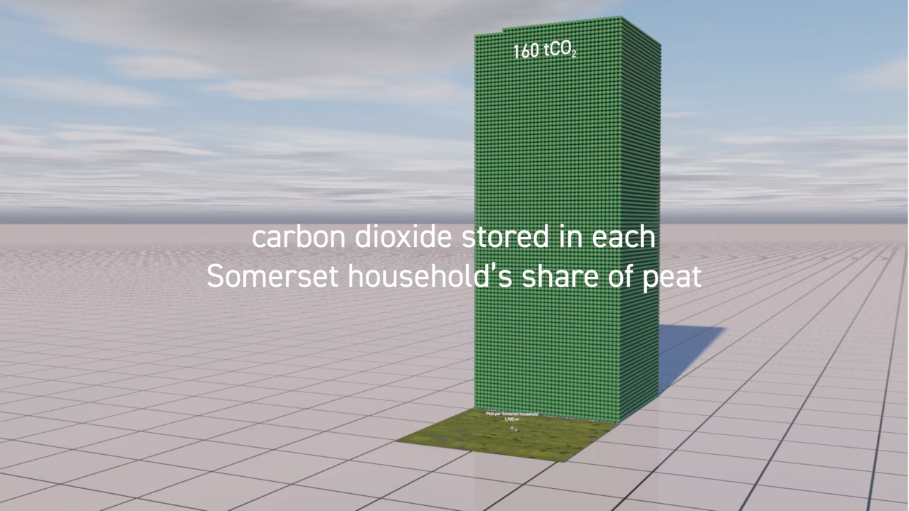
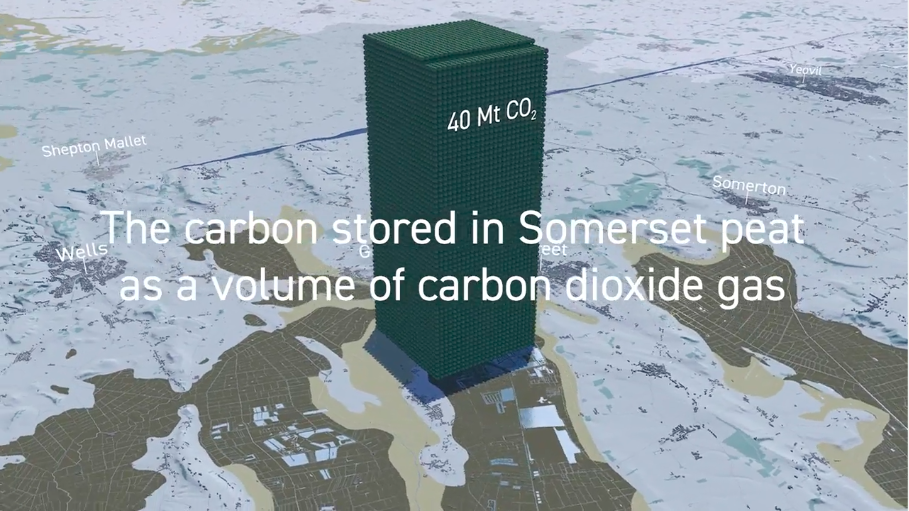
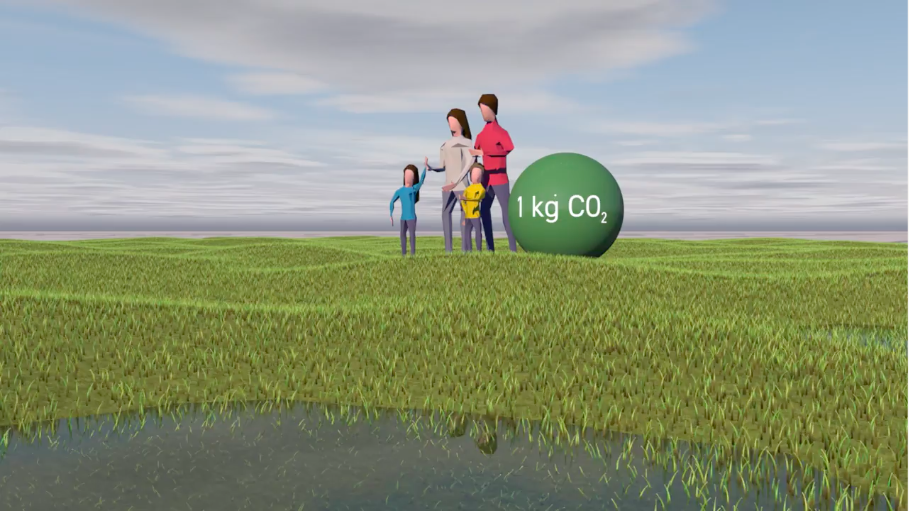
“We are really happy with the end result of both videos. They concisely communicate the issues or peat restoration and river reconnection to a broader audience, and I think the visual elements demonstrating carbon storage and flooding risk are particularly striking, and help bring the story to life”
Do get in touch if you would like an animation to show an important place-based environmental story. info@realworldvisuals.com

Trees store carbon
In 2014 we made a video set for Wood for Good, the UK timber industry’s promotional campaign, showing the carbon benefits of using wood and timber in the UK construction sector. The brief, eight years later, was to make shorter versions of the films suitable for educational use and social media sharing
We made a video set in 2004 for Wood for Good, the UK timber industry’s promotional campaign, showing the carbon benefits of using wood and timber in the UK construction sector. The brief, eight years later, was to make shorter versions of the films suitable for educational use and social media sharing.
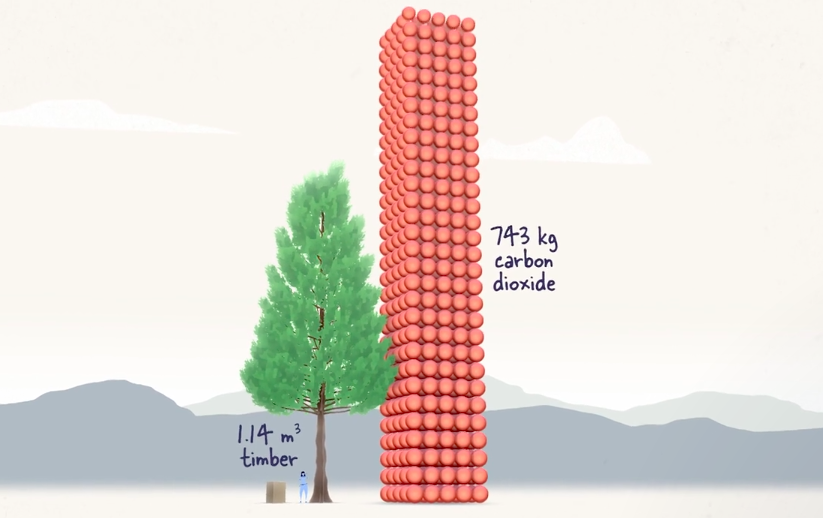
The idea was to inform the audience about storage of carbon, replanting of trees, substitution of wood materials for more CO2-intensive building materials.
The target audience was UK Builders, architects, planners, engineers, specifiers, contractors, surveyors; UK Policy makers/local authorities and those who may have no / little prior knowledge of the technical/scientific processes behind carbon sequestration
Wood for Good wanted to show students at university/school level and educate them on the benefits of timber as a building material or to illustrate carbon sequestration. They also wanted to help timber industry to market timber’s environmental benefits and help them to reach their own sales/business goals.
All four videos as one are here.

All forests are not the same
Primary ‘old growth’ forests are unique and irreplaceable. But how do you get that message across to governments, policymakers and corporations? And the message that not all forests are the same?
Primary ‘old growth’ forests are unique and irreplaceable. As well as sustaining local communities, they protect over two thirds of the planet’s land and freshwater species, including countless endangered species. They are natural quarantine areas, preventing the spread of zoonotic diseases like COVID19. And they store vast amounts of carbon from the atmosphere, half of which is locked up in the massive old trees which tower over the forest canopy. But how do you get that message across to governments, policymakers and corporations? And the message that not all forests are the same?
We were asked by two campaigning NGOs IntAct and Wild Heritage, to create videos that get across these important messages. Firstly how much forest remains - we are currently losing a hectare of these forests every two seconds - and how much has been lost to degraded, regrowth and plantation forest.
Secondly, the destructiveness of the practice of ‘sustainable forestry’ in old growth forests, particularly in the tropics. This popular way of ‘preserving’ these forests is to only take out the big old trees as these are the most valuable. But this practice can only work when a few trees are removed and replacements are given at least 100 years to regrow, something that rarely happens in practice.
So please watch the videos, pass the links to friends, family and colleagues. You might like to think about a more sustainable alternative when you are next looking to replace your kitchen worktop with a hardwood like Iroko.

Carbon in peatland
Dartmoor is a wild peatland landscape in Devon, England, know for its wild horses and sheep that wander freely. This animated slideshow illustrates the amount of carbon that is ‘sequestered’ by the peat and shows the importance of these landscapes as natural carbon stores.
Real World Visuals worked with Paul Lunt from Plymouth University in a scheme that brings academics and creative agencies together. He needed to visualise data that had been gathered on the carbon sequestration in peatlands, in particular Fox Tor Mire, Dartmoor. The project needed a film and a set of images to help visualise the quantitative data they had collected that could communicate the benefits of carbon storage in peatlands to the public and landowners.
Working within a tight budget we produced an animated slideshow of images that differs from our usual animations but continues to give a good visual narrative to the data. We used a combination of CO2 bubbles and a variety of perspectives to help viewers to ‘see’ carbon. Using the landscape of Fox Tor Mire and using a single person as a real life scaling object brings added meaning and understanding to the volume of carbon sequestration in peatlands and how important it is as biological system that can store carbon.
Carbon sequestration in the Severn Estuary
We think of estuaries primarily in terms of nature and wildlife. But estuaries also provide important ecosystem services, for instance the saltmarsh sequesters and stores carbon dioxide from the atmosphere. Communicating this to the public is a challenge, but we wanted to have a go…
We think of estuaries primarily in terms of nature and wildlife. But estuaries also provide important ecosystem services, for instance the saltmarsh sequesters and stores carbon dioxide from the atmosphere. Communicating this to the public is a challenge, but we wanted to have a go…


Real World Visuals was commissioned by WWT Consulting on behalf of the Severn Estuary project partners* to create simple sketches to show how much carbon dioxide is sequestered in the estuary. But how much carbon dioxide is sequestered by a salt marsh? It turns out to be 21 kg per hectare per day. And the estuary represents the largest aggregation of salt marsh habitat in the south and southwest of the UK, covering about 1,400 hectares.
Note that these sketches were created to help the group consider options for communication with the public. These would augment existing words and maps, and would help explore how to broaden the discussion about benefits of ecosystem services provided by the estuary.
*The Severn Estuary project partners are a coalition of organisations that seek to restore the estuary as a healthy functioning ecosystem, valued for its wildlife, habitats and landscapes and also benefiting local communities, places, and economies.
Further information from the Severn Estuary project partners website. WWT Consulting website here.